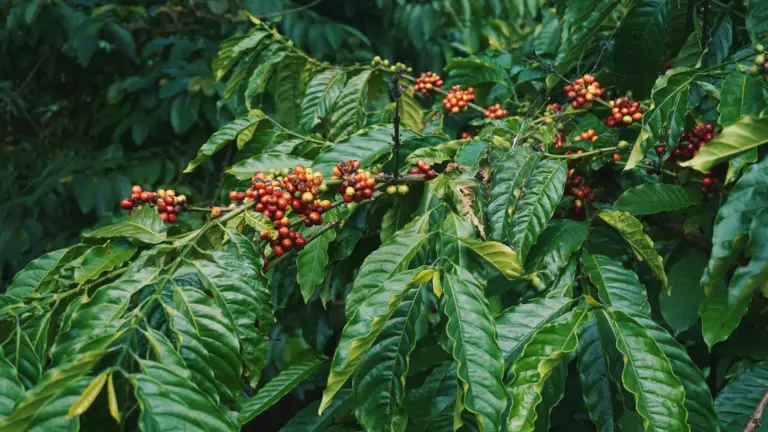
Aside from robusta, Arabica is one of the most commonly available coffee beans in Indonesia, whether at your favorite cafe or ready to be brewed at home. Yet, beehind the flavor that many coffee lovers adore, there are several interesting facts you might not know yet. Let’s get to know arabica coffee a little better with these fun facts below!
8 Interesting Facts About Arabica Coffee
1. Arabica Can Be Commonly Found Thoughout the World
Among several coffee varieties out there, arabica is the one most widely cultivated and consumed around the world. Its smooth and aromatic character has gained many fans, whether casual coffee enjoyers or seasoned enthusiasts.
This is also backed by data from the International Coffee Organization (ICO) compiled by Katadata, which shows that arabica production reached around 105 million bags (60 kg per bag) in 2020 or accounting for about 60% of total world coffee production, far surpassing robusta with roughly 70 million bags in the same year.
2. Arabica Has Origins in Ethiopia Instead of Arabian Peninsula
Despite its name, arabica coffee was actually first discovered in the highlands of Ethiopia, not the Arabian Peninsula. According to the National Coffee Association (NCA), arabica coffee trees are direct descendants of wild coffee trees native to Ethiopia, before eventually cultivated on the Arabian Peninsula and spread across the world, including Indonesia.
3. Arabica Has Smooth Characters with Bright Acidity
Part of the reason why arabica coffee is so well-loved is its smooth, fruity character paired with a bright refreshing acidity and aroma that leans toward soft floral notes. These characteristics are why arabica coffee is widely sought by those who enjoy exploring the complexity of coffee flavours.
Compared to robusta, arabica has a lower caffeine content, at only around 0.4–2.4% of its total dry weight. This lower caffeine level gives it a smoother and less intense taste, making it a great fit for beginners trying coffee for the first time.
5. Arabica Thrives in Cool, High-Altitude Areas
Arabica is mostly cultivated in highlands with cool temperatures between 18–21°C, typically at altitudes of 800 to 1,700 meters above sea level. Some of its variants, like Toraja coffee, grow at even higher altitudes like 2,000 meters or more. This cool climate slows down the ripening of the coffee cherries, making the cultivation process longer, yet resulting in a richer flavor.
You can experience the result of this process firsthand through Unakaffe System Toraja coffee capsule, with its bold, velvety body and signature notes of cocoa and grapefruit.
6. Arabica is Sensitive to Weather Changes
Arabica needs extra care due to being extra sensitive to even the slightest weather change. Humidity, rainfall, and temperature need to be kept within a certain range so that the coffee trees can grow optimally. It’s no surprise that cultivating arabica requires special treatment all the way to its harvest process, which still has to be done by hand by farmers.
7. Arabica Can Self-Pollinate
Arabica coffee plants are self-pollinating, meaning they can fertilize themselves. This happens because their flowers are hermaphroditic, containing both pistils and stamens, so arabica plants don’t need wind or insects to pollinate. This unique trait actually helps keep its genetic character consistent from generation to generation, so the quality of its flavor stays intact even after generations.
8. Most of Indonesia’s Signature Coffees are Arabica
As one of the world’s largest coffee-producing countries, many of Indonesia’s internationally renowned coffees are arabica, including Toraja, Mandheling, Kintamani, and Gayo coffee. Each region produces their own distinctive flavor character due the variety of each growing location as stated before on previous point.
This Is Just the Start of the Arabica Story
Arabica truly is a coffee with rich history and character beloved by many, but the story doesn’t end here. You can also learn more about the arabica coffee grown in Bali, Toraja, Flores, and Mandailing through our previous articles.
But before that, get to know the story of arabica coffee even better through Unakaffe System single origin coffee capsules. Curated from the best coffee producing regions in Indonesia, you can enjoy it at home with just one click on your Unakaffe System coffee capsule machine.
Among Indonesia’s single origin coffee varieties, Bali Kintamani coffee stands out with clear and bright fruity notes. Its refreshing citrusy character makes this coffee a great starting point for anyone looking to start exploring single origin coffee. Curious about what makes Bali Kintamani coffee so special? Let’s take a closer look at this unique coffee […]
While single origin coffee is known for the distinct flavors that reflect its origins as the name suggests, Unakaffe System Signature Blend tells a different story. Signature Blend brings together carefully selected coffee beans from different origins, expertly blended into a single capsule. Curious to learn more? Before we dive into each Signature Blend capsule […]
As a major coffee producing region in Indonesia, Bali, Toraja, and Flores are well known for producing high quality Arabica coffee. Despite that, arabica coffee from these three origins have remarkably different characteristics, from flavor and aroma to body and intensity. Understanding these differences can help you find the coffee that best suits your preferences. […]
1 September 2026
Subscribe
Contact Us
Follow Our Stories
Subscribe now to receive information about our new products, exclusive offers, and coffee recipes to make at home!
Contact Us
Need help or have any inquiries regarding Unakaffe System product? Connect with us today! Our team is more than happy to help.